
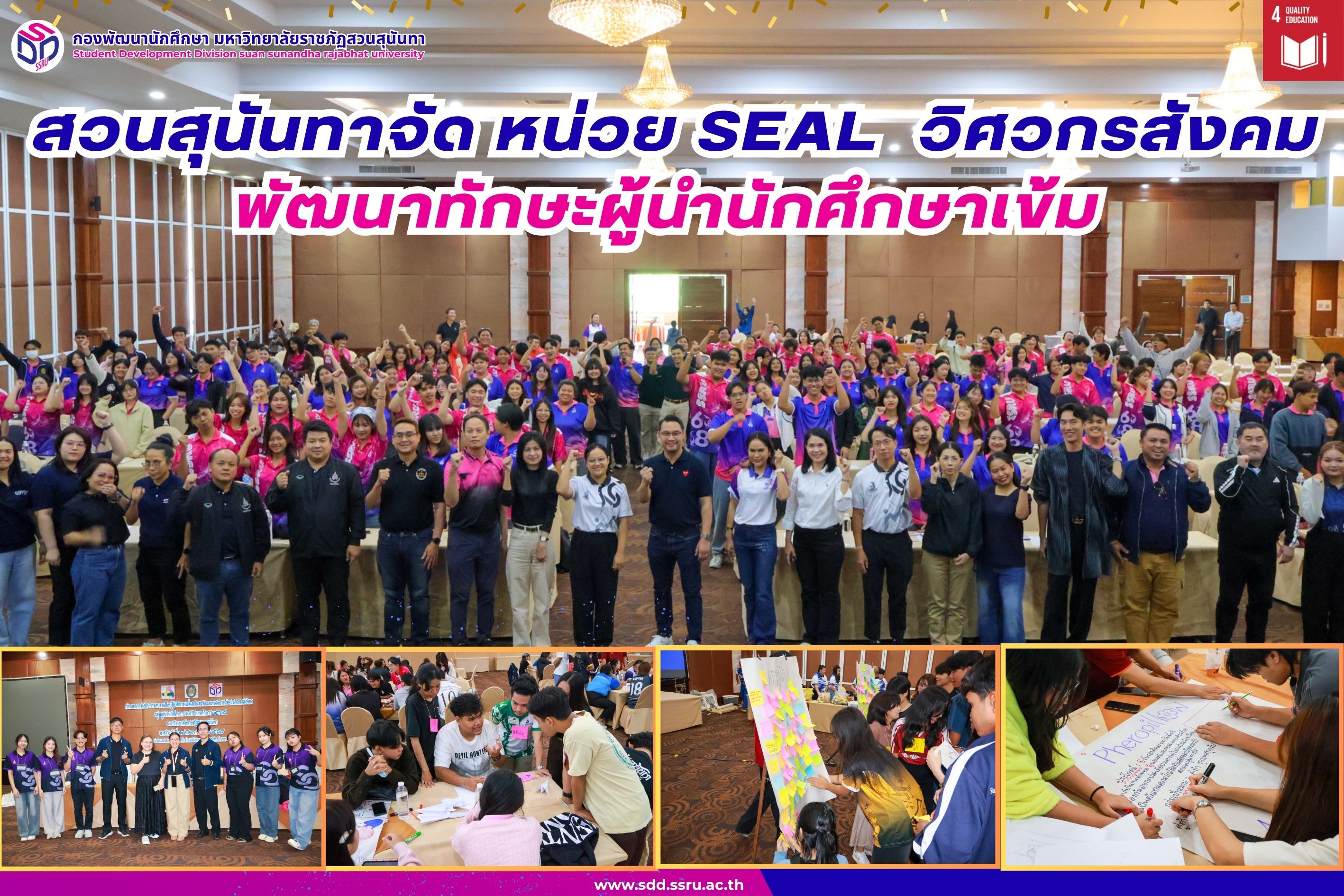
Suan Sunandha Rajabhat University, through the Student Development Division, Student Activities and Alumni Affairs Section, organized a workshop to enhance and develop social engineering skills among student leaders for the academic year 2025. The program was held from March 17–20, 2026.
At the opening ceremony, Associate Professor Dr. Chutikarn Srivibul, President of the University, assigned Assistant Professor Dr. Somsak Klai-sang, Vice President for Student Affairs, to preside over the event.
The workshop was honored by expert speakers, including Assistant Professor Acting Sub Lt. Suchat Khumsut (SEAL Unit 024), Dr. Suwaphat Pironrit (SEAL Unit 005), Mr. Warawut Yodchan (SEAL Unit 021), and Ms. Nattaya Cherngchalad Chuprom (SEAL Unit 007). Also present were Assistant Professor Dr. Thuwathida Suwanrat, Assistant to the President for Student Affairs, Mr. Nipon Chaipruektol, Director of the Student Development Division, along with heads of departments, staff, and over a hundred student leaders from the Student Union, Student Council, and faculty and college clubs.
Assistant Professor Dr. Somsak Klai-sang stated that the training program was designed to develop student leaders from all 15 faculties and colleges, equipping them with social engineering skills. These skills focus on developing students into thinkers, communicators, coordinators, and innovators—graduates who can effectively analyze and solve community and social issues using systematic approaches and the five key social engineering tools.
The Social Engineering Program aims to produce a new generation of student developers equipped with 21st-century skills, capable of creating innovations and knowledge to address real community needs. The program emphasizes data collection, analytical thinking, and five core tools: Divine Inspiration, Life Clock, Development Timeline, Process Timeline, and the M.I.C. Model, all contributing to sustainable improvements in quality of life.
This activity aligns with the Sustainable Development Goals (SDGs), particularly Goal 4: ensuring inclusive and equitable quality education and promoting lifelong learning opportunities for all.